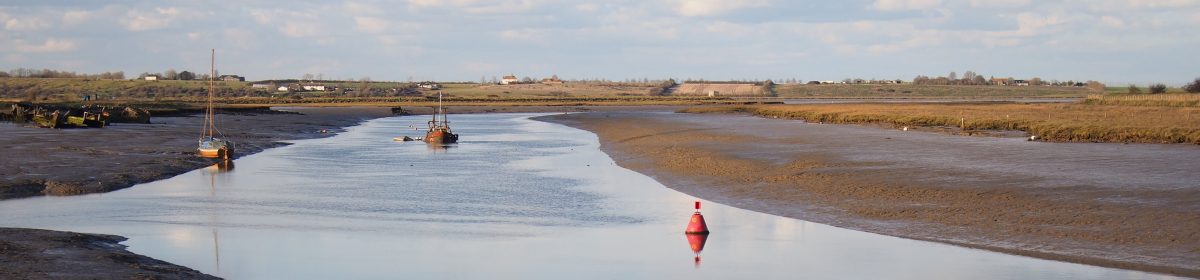
Estuary, by Rachel Lichtenstein

As a regular Thames Estuary mudlarking sailor, I like the look of this!

The blurb:

The Thames Estuary is one of the world’s great deltas, providing passage in and out of London for millennia. It is silted up with the memories and artefacts of past voyages. It is the habitat for an astonishing range of wildlife. And for the people who live and work on the estuary, it is a way of life unlike any other – one most would not trade for anything, despites its many dangers.

Rachel Lichtenstein has travelled its length and breadth many times. Here she gathers these experiences in an extraordinary chorus of voices: mudlarkers and fishermen, radio pirates and champion racers, the men who risk their lives out on the water and the women who wait on the shore. Estuary is a thoughtful and intimate portrait of this profoundly British place, both the community and the environment, examining how each has shaped and continues to shape the other.

An extract:

‘As the light slowly faded on the longest day of the year I sat on deck with the rest of the crew drinking bottled beers, sharing stories and watching the cityscape transform. By dusk a low mist had begun to obscure most of the buildings. The iconic dome of St Paul’s temporarily disappeared before re-emerging, floodlit, against the London skyline. Red-flashing beacons began to appear sporadically through the fog, marking the tops of tall cranes and skyscrapers. The skeletal frame of the Shard came suddenly into focus as every floor of the tall skyscraper lit up simultaneously. At the same time the beautiful gothic structure of Tower Bridge behind us was illuminated from above and below, throwing a sparkling reflection into the black waters of the Lower Pool of London – a place where so many of the world’s most important ships must have anchored at different points in time. As night fell the lights inside all the flats, hotels and offices along the riverside came on. We floated in the dark void of the river between time.

‘On the water the sounds of the city seemed altered. I could hear the distant hum of traffic on the bridge, the clatter of trains rumbling past, the constant backdrop of sirens going off but it was as if they were coming from another place altogether, not the great throbbing metropolis above. I sat and watched the vast twin bascules of Tower Bridge being slowly raised. A Thames Barge sailed silently past and drifted beneath the bridge before quickly disappearing into the shadows on the other side. On the remains of a wooden jetty nearby, I could just make out the shape of a large black cormorant standing perfectly still with its great wings outstretched.’

Getting Afloat with Nick Gates

In this first episode, Nick finds a suitable restoration project, visits Burnham sailing Club, repairs a Mirror Dinghy, finds a 12 Sq meter Sharpie to restore and visits Itchenor Sailing Club.

And more follows:

The Canoe Yawl, by Richard Powell

The Canoe Yawl: From the Birth of Leisure Sailing to the 21st Century by Richard Powell from publisher Lodestar is great news.

There’s a lot of talk discussion about canoe yawls and a great sense that they are to be admired in the forums and magazines – but why and what’s the story? Probably for a couple of decades I’ve felt that a clear analysis of the type and a description of its history was sorely needed – and now we have it.

Canoe yawls were originally developed from sailing canoes in the late 19th century, in order to allow amateur sailors to sail in the conditions often found on UK’s estuaries and coastline.

Our weather is changeable and, even with modern weather forecasting it is still unpredictable in small boat sailing terms: for example, the wind is often a force stronger than predicted. Many small boat sailors have learned at first hand that shallow estuaries full of channels have strong currents and that as soon as the wind against the tide, the chop may become so fierce that beating to windward becomes nigh-on impossible unless you can creep into shallows. (You need to be an unusual sailor to manage this stuff and it helps to have the time available  to wait for suitable weather – read about Gavin Millar’s sailing canoe round the UK attempt.)

But back to the canoe yawl. What does the type offer? In this book, Albert Strange Association technical secretary Richard argues that the canoe yawl is still the best type for single- or short-handed coastal cruising sailor, and that a revival of interest in recent years underlines his point.

Why? You’ll have to read the chapter ‘Why the canoe yawl‘ for the full story, but in his preface Iain Oughtred says the rig ‘is particularly user friendly; the spars are short, the centre of effort is low, and the rig is quickly and easily shortened down or adjusted according to the conditions. In a sudden hard gust, the boat,  although heeling considerably, will remain balanced on the helm, and will not screw up into the wind in the way a tall bermuda rig is inclined to do… the double-ended hull has a lot to do with its good behaviour… These boats have a comfortable and reassuring quality… ‘

I think most folks would also agree that canoe yawls are usually very attractive little vessels.

For the princely sum of £15, this volume of 160 well illustrated pages is a fascinating read. Read a sample here. Buy it from all good nautical booksellers or directly from publisher Lodestar.