Temptation of a different kind, if you can stand it…

Well, I have to say she tempts me, and that you’d have to be very hard-hearted not to love her!

She’s a 1935 National 12, and has just been sold by Wooden Ships at Dartmouth. She’s just so sweet and with a new set of sails she could be ready for this summer…

The National 12 was designed by Uffa Fox before WWII as a class racing dinghy, and this example is in a complete time-warp, having been kept ashore for over 20 years after remaining in the same ownership from new until last year.

Built from clinker mahogany with all-copper fastenings, she has a galvanised-steel centre plate, a mahogany drop rudder, and is complete with an original gunter cotton sail on an original bamboo yard and a bronze main-sheet horse.

Clicking on the image will bring up a larger image.

http://www.woodenships.co.uk/

1935 National 12

Some curragh photos

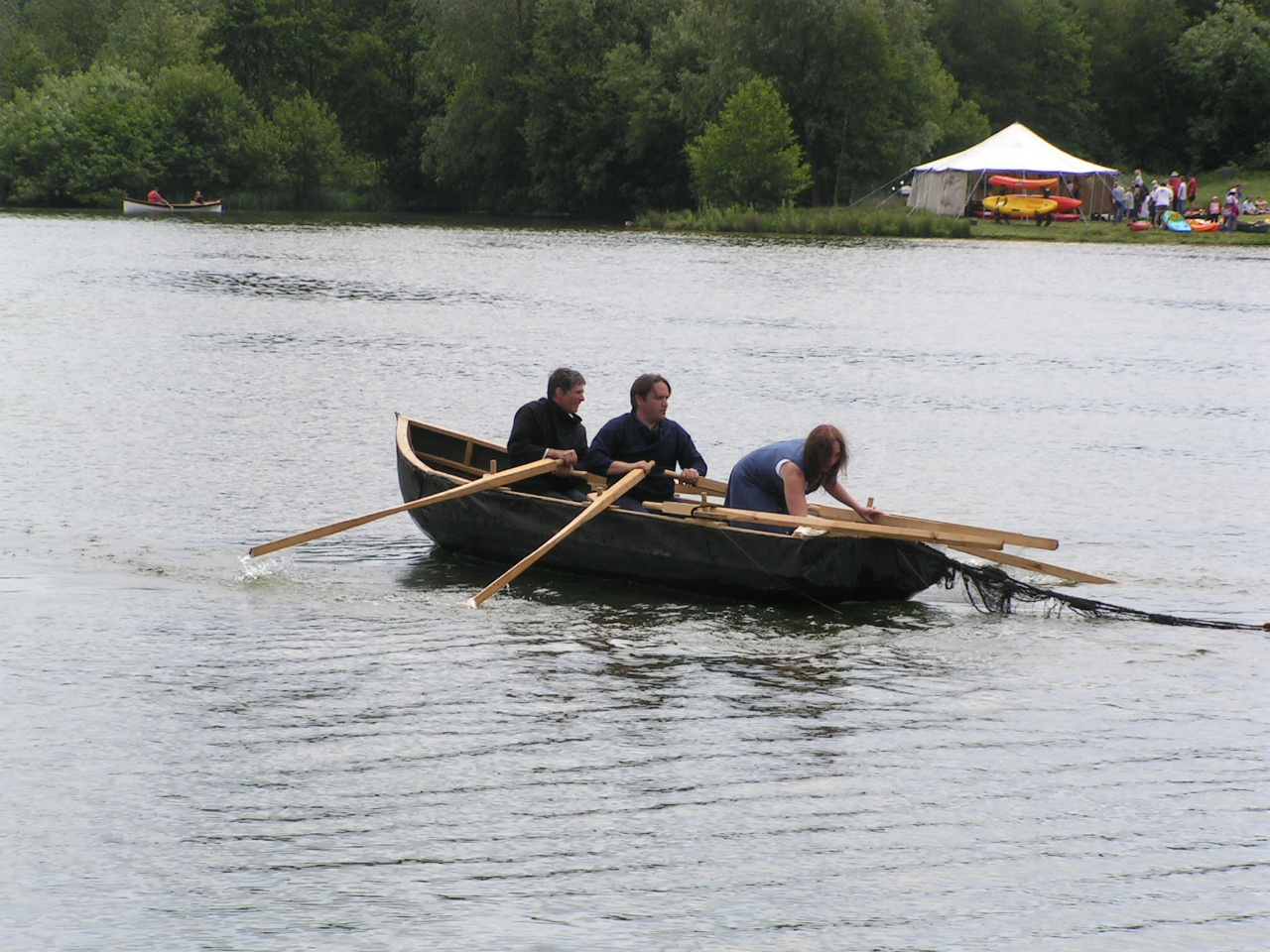
Here are some curragh photos I took at the Beale Park Boat Show a couple of summers ago. I particularly like the one where the boat seems to be almost on the plane, and the one with the mythic Gaelic beauty casting her nets into the water… As before with my photos, if you click on the image, an enlarged view will pop up.

If you’d like to share these with a friend, please send them this link: http://intheboatshed.net/?p=227

Perhaps I should ask the Beale Park people to sponsor this site! If the Boat Show organisers are listening, our charges would be very reasonable, the site is aimed at traditional and hand-built boat enthusiasts based in the UK and we’ve had more than 3300 visitors in the few weeks we’ve been in existence.

Currach 1

Currach 2

Currach 3

The curraghs of Ireland

Here are some hugely informative chapters from an old book by James Hornell describing the curraghs of Ireland. It’s a most impressive piece of work, and covers rowing and sailing curraghs, coracles and a kind of long paddling curragh variant I wasn’t previously aware of. If you want to get into curragh building, this book must represent the very large majority of what you’ll need to know.

I’d love to hear from curragh and coracle builders and to be able to publish photos reports and the rest, by the way – if this is you please let me know at gmatkin@gmail.com.

http://www.texascoritani.com/British_Coracles_and_Irish_Curraghs.pdf

Check the extract from J M Synge – it’s the kind of thing that needs to be read out loud with all the family gathered around.

Finally, there are some great contemporary curragh photos at
http://www.pbase.com/light_works/z_currachs

Curragh