John Welsford’s micro cruiser Fafnir sparks the imagination

[ad name=”intheboatshed-post”]
John Welsford micro-cruiser Fafnir

John Welsford micro-cruiser Fafnir

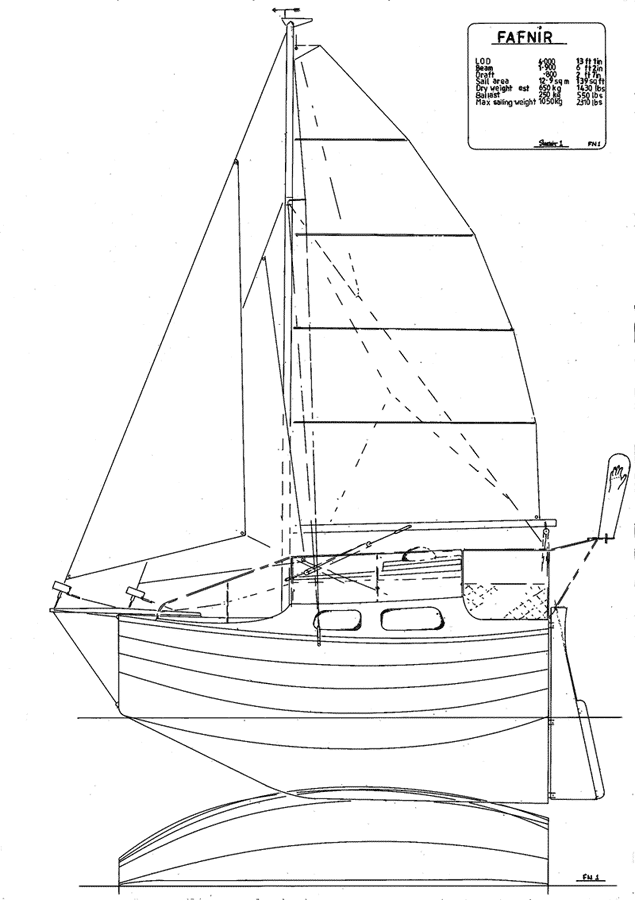
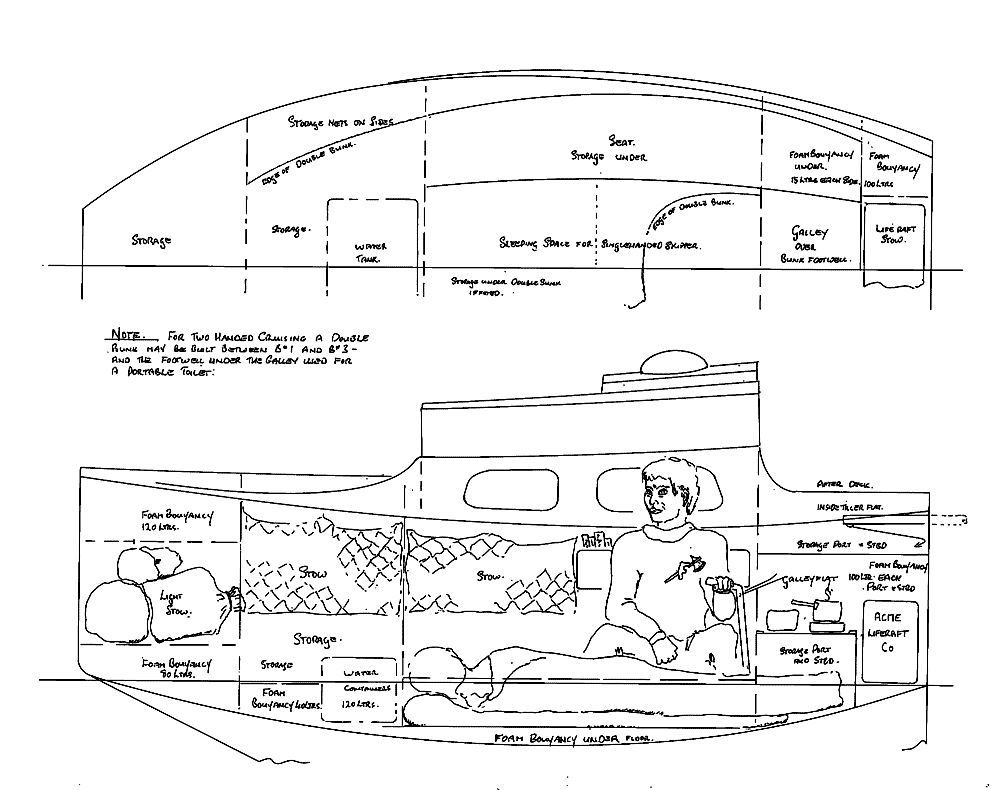
John Welsford’s interesting Fafnir design. Click on the images for larger drawings

John Welsford tells me that the level of interest in his new Fafnir pocket cruiser design is exceeding all expectations.

It’s certainly an interesting boat – a blue-water cruiser capable of being build in a typical garage, and there’s a good case for saying that it’s the best choice available for someone who wants to sail alone in a small, easily handled boat.

Its crucial dimensions are:
•Length on deck 13ft 1in (4.00m),
•Beam 6ft 2in (1.90m)
•Draft 2ft 7in (0.800m)
•Sail area 139sqft (14.9sqm)
•Dry weight estimated 1430lbs (650kg)
•Ballast 550lbs (250kg)
•Maximum sailing weight 2420lbs (1100kg)

John describes Fafnir as a tough little cruiser for one or two, and tells a story about how the design came about at his website.
It seems a customer wanted to build a 10ft boat in which to circumnavigate, so John worked out a route, the amount of current assist that was possible, the weather windows and the climatic and stores consumption issues – and decided the voyage wasn’t practical.

But he went on to draw the minimum boat he considered workable – and Fafnir is the result.

Go to John Welsford’s site to learn more!

An oar in the Australian bush carpentry style

[ad name=”intheboatshed-post”]

Australian bush carpentry oar

Australian bush carpentry oar Australian bush carpentry oar Australian bush carpentry oar

An oar, and a fine example of Australian bush carpentry, says Jeff Cole

Jeff Cole sails an Iain Oughtred MacGregor canoe and occasionally sends us photos from his wonderful and growing collection of yachting photos from the 19th and early 20th centuries. What’s less obvious is that he also has an interesting line in collecting items of old Australian bush carpentry.

Here’s what he says about the oar in the photo above:

‘This is a vernacular creation, bush carpentry at its most basic, an oar that seems old but it’s hard to tell – but very collectible.

‘I found it on the woodheap at a Mallee (sandy desert without water) clearing sale. The closest water is an irrigation channel, next to the Murray river. It’s six feet long, and made of wood, with iron spikes, some cotton sash cord, a little rubberised canvas, nails and red paint.

‘The roughly shaped triangular “blades” of the oar fixed by iron rod roughly peened over and in some cases using triangular galvanised “roves”. It’s absolutely out of balance, but a prize for my collection nevertheless!

‘Jeff’

Thanks Jeff – now that’ll give all those home boatbuilders something to think about!

For more of Jeff’s contributions, click here.

River Fal history talk at the National Maritime Museum Cornwall

[ad name=”intheboatshed-post”]

Victorian postcard taken at Tolverne on the Carrick Roads

Victorian postcard taken at Tolverne on the Carrick Roads

The NMMC is offering an opportunity to travel back in time at the end of this month, when local historian Ralph Bird presents a talk at the museum that will take his audience down the River Fal.

Timed to coincide with this year’s Fal River Festival, the talk will start at 6.30pm on Wednesday 28 May, and will look back at how the Fal has changed over the past 100 years, during which it has gone from being predominantly a river of business to the river of pleasure we know today.

Starting in Truro and ending in Falmouth, Bird will reveal places of interest and highlight the different uses to which this once-bustling waterway has been put. He will also discuss some of the many ships that have been laid up in the furthest reaches of the river – there have been as many as 70 war and cargo ships laid up in the Fal’s creeks.

For more information go to the NMMC website.

Don’t miss out – please subscribe to our new improved alerts! Click the window or profile link below.