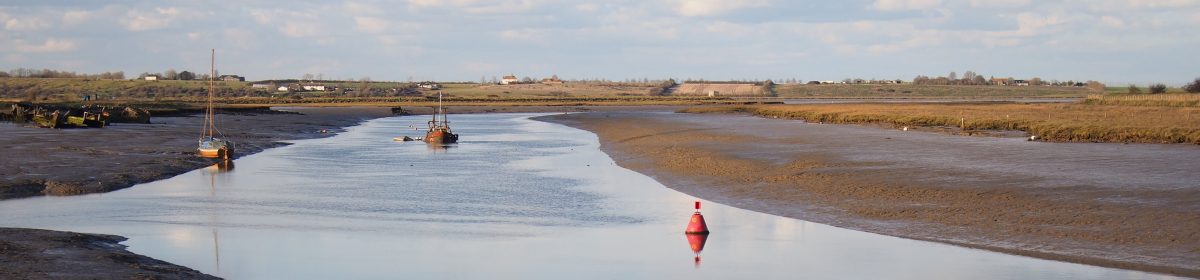
Redmond’s Elver – is it related to Southwind?

[ad name=”intheboatshed-post”]

Elver sail plan

Steve Redmond’s Elver

Any resemblance seems to be accidental!

In response to my request for information about whether Chappelle’s intriguing Southwind had ever been built, today I received an email suggesting I have another look at Steve Redmond’s Elver. The email’s author suggested that the two boats might be very closely related, and that one might have been redrawn from the other.

The comparison is interesting. The Elver has something in common with the earlier Southwind design, including a flat bottom, fairly similar proportions, and sides shaped by a master curve. And both boats are better suited to day sailing than to extended cruising.

However, they are far from being the same boat:

– the Elver has relatively more no rocker where the Chappelle boat has a significant amount

– the Elver is lightly built and unballasted, while the Southwind is designed to be heavily built with many frames, and is certainly intended to carry ballast

– relatively speaking, the Elver has rather more freeboard than Southwind

– the Southwind’s widest beam is relatively forward of Elver’s

– and the two boats have different rig and cuddy arrangements

All in all, while the Elver is like a big dinghy with a lid (in the British English sense), the Southwind is a workboat-derived yacht, and it could be argued that each boat reflects the interests and background of its designer.

As if to eliminate any lingering doubts, not so very long ago at the Woodenboat forum Redmond himself made clear that his boat was not redrawn from Chappelle’s, and seems not to have known of its existence before it was pointed out to him quite recently.

Having settled that question, it’s clear we can’t assume the Elver’s performance is any sort of guide to that of the Southwind’s. Although various people have raised concerns about the stability of the Chappelle boat, even without making any calculations, I’d suggest that even with internal ballast a boat that lived in an area of reasonably light winds, measured 22ft in length with modest overhangs and was 8ft in beam might be expected to stand up to sails just over 200sqft much of the time. I’m quite sure, however, that it wouldn’t have the self-righting characteristics we expect from modern boats, however.

I have come across a tantalising link suggesting that Southwind has been built at least once.

In the meantime, intheboatshed.net readers may be interested in the following links featuring the Elver:

– Short video clip of sailing a home-built Elver.

– A tour of the same Elver.

– Another video clip showing an Elver boat building project.

Photos and commentary about another home-built Elver, together with some reflections on the boat’s merits and some alternatives that potential builders might consider.

– Another Elver boat building project.

– The Elver builders Yahoogroup

Elver plans from designer Steve Redmond’s site.

I should declare an interest – I’ve been harbouring an urge to find time build Redmond’s skiff Whisp for years, and have mentioned it once or twice on this weblog.

Share this with interested friends using the Share this link below.

Howard Irving Chappelle’s intriguing small ketch Southwind

[ad name=”intheboatshed-post”]

Chappelle’s Southwind dory-sharpie schooner

Chappelle’s picturesque schooner Southwind

Howard Irving Chappelle was a giant among chroniclers of American vernacular boats and boatbuilding – his books Small American Sailing Craft and Boatbuilding are classics, but look out also for his books on schooners, speed in sailing ships and the development of the sharpie. His books are of wide interest far beyond America’s borders because so many small American sailing craft derived from the old world, as Chappelle makes clear.

Although they’ve been reprinted several times over the years, many of them are difficult to find and not available through Amazon – so if I hadn’t already got most of them I’d begin my search at Abe Books.

[ad name=”doubleclick-abe”]

Amid all the research, line-taking and writing he did over the years, it’s often forgotten that Chappelle was a practising naval architect who also found time for designing dinghies, cruising yachts and fishing craft. I’ve written posts in the past about his friendship with the British boatbuilding innovator Herbert Ashcroft, but today I thought I’d draw attention to his shippy-looking shallow-draft dory-sharpie ketch Southwind.

Take a look at the article and drawings at the Svenson website – there’s enough in this material to actually build the boat, and certainly enough to make a nice model.

I must say I’m intrigued. The boat makes a handsome picture, would no doubt turn heads anywhere and has a lot to offer shallow water sailors. But has it ever been built? If so, can anyone tell us how it performs?

Share this with your social network using the Share this link below.

A little classic to build this spring

[ad name=”intheboatshed-post”]

Forest & Stream skiff in Sweden

Forest & Stream skiff in Sweden Forest & Stream skiff in Sweden Forest & Stream skiff in Sweden

It’s the LITTLE boat you’re meant to look at,
darn it! Not
the BIG one!

Judging by the mail in my inbox, the boat-dreaming season is giving way to the boat-building season just a little before the buds open.

So I thought I’d pull a rabbit out of the hat – free plans for a little plywood dinghy anyone can build, but which happens to have classic proportions and an appealing, old-fashioned look. It could be built using the old-fashioned method using internal chine logs, or by stitch and glue.

It might appeal to model makers too, and in any case I’d argue that it’s always worth building a model before going the whole way to a full-sized boat.

Share this with a friend using the Share this link below.

About the time I started to play with CAD and hull modelling software, someone – I think it was Craig O’Donnell of the Cheap Pages – kindly sent me some scans of a little sharp-bowed from a copy of the magazine Forest & Stream dating back more than a hundred years. He knew I was interested in understanding sharpies and skiffs at the time, and thought this one would catch my attention.

He was right. Not only was it a sweet boat, but I could see it making a nice early project for someone just learning to work CAD software. Click on the image below for the scan he sent me:

Forest & Stream skiff original scan

Forest & Stream skiff

There was just one snag. Continue reading “A little classic to build this spring”